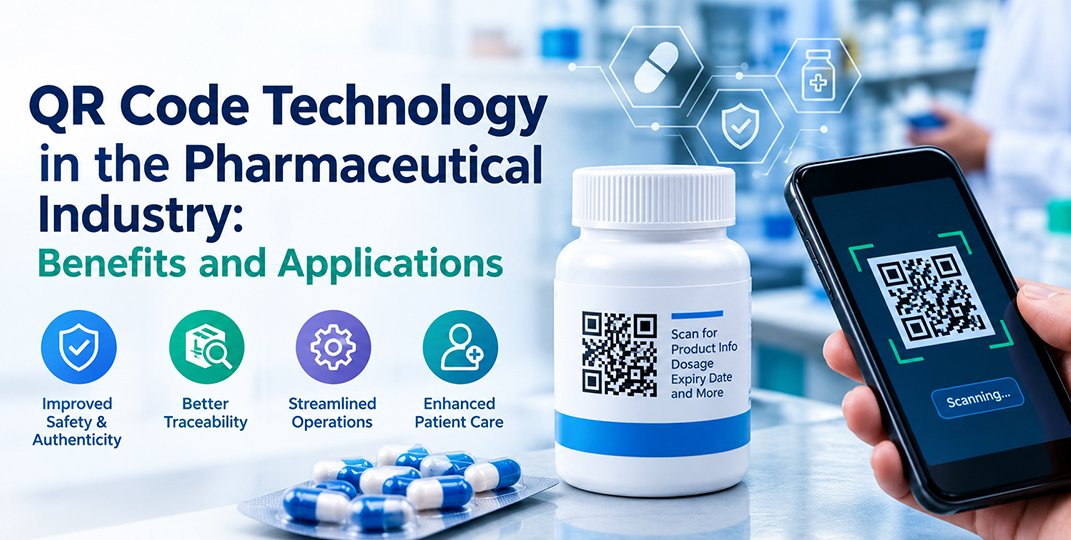
Counterfeit and poor-quality medicines are a global issue. The pharmaceutical industry is facing pressure to make all packs easier to trace and verify.
Two-dimensional (2D) codes are part of the solution. These codes contain more information than a conventional barcode and can link a pack to digital information online.
QR codes are one type of these, and some countries already have them on medicine packets or leaflets.
Having said that, today we’ll talk about where QR codes fit, what benefits they bring, and their applications across the pharma chain.
Where QR Codes Fit Among Pharma Packaging Codes
There are several different types of 2D codes that can be used in pharma packs, so it is important to understand their differences.
A QR code is a square grid that most smartphone cameras can read. A GS1 Data Matrix is a similar 2D code that is used in global healthcare.
The rules for using such codes vary by region. Prescription medicines in the European Union have a Data Matrix on the outside pack to meet the compliance requirements set by the Falsified Medicines Directive. It is not required on over-the-counter medicines, though.
In a draft reflection paper from March 2025, the European Medicines Agency says that the existing Data Matrix should be used to access electronic leaflets, rather than printing a second code. That’s done to avoid confusion about which code to scan. The paper also mentions that most smartphone cameras are not able to scan a Data Matrix without additional software.
India, on the other hand, takes a different approach. Since August 2023, the top 300 drug brands covered under Schedule H2 of its Drugs Rules must have a barcode or QR code with data that supports authentication. The rule is stated in the guidance issued by the national regulator, CDSCO, on spurious drugs.
Furthermore, GS1 India’s implementation guide adds that a QR code with a GS1 Digital Link can be read with any smartphone camera. Whereas a Data Matrix needs a specific app. Since the two codes carry data in a similar way, the choice depends on the production process and the goal.
Main Benefits of QR Codes in Pharma
QR codes can be useful in 3 primary ways, depending on the regulations. Each one depends on the quality o the data behind the code.
1. Safer Medicines & Easier Checks
Falsified and substandard medicines are a huge threat. In fact, the World Health Organization says that at least 10% of medicines in low- and middle-income countries are substandard or falsified.
And not just that, during 2022-23, CDSCO tested 96,713 drug samples, of which 3,053 were found to be substandard and 424 spurious or adulterated.
Considering this, a code on the pack can provide a fast and easy method for pharmacists and patients to verify a medicine against a trusted source.
2. Faster Access to Patient Information
Printed leaflets can become out-of-date. A QR code, on the other hand, can link to a current electronic version, including updated safety information.
Paper leaflets can also take many months to update and re-print. An electronic leaflet can be made available as soon as it gets the required authorization.
Another thing to note here is that the paper leaflets stay important for people with low digital literacy or limited internet access. On the other hand, a QR code with a link can help patients who need larger text, because an electronic leaflet can be enlarged on screen.
3. Better Traceability & Recalls
GS1 India recommends that the code should only contain the product code, batch number, and the expiry date of the medicine.
This information sits in the manufacturer’s database and appears only when the code is scanned. It not only lets consumers know the expiry of the medicine but also supports batch-level tracking. If a batch needs a recall, a scan can show which batch a pack belongs to. This can make the recall way more targeted, if the need ever arises.
Practical Applications Across the Pharma Chain
QR codes appear at several points in the journey of a medicine from the factory to the patient.
1. Packaging & Label Proofs
Before a print run, teams need to confirm that codes read correctly. They must be tested and verified before production.
A quick read check can catch obvious errors early.
This can be done with a QR code scanner that accepts multiple images at once and lets a team scan a set of label proofs. They can then make sure all the decoded data points to the right page.
That said, here are some points worth checking:
✔ Decoded data: The text or link matches the approved destination of the code.
✔ Batch and expiry fields: Placeholders are replaced with real ones.
✔ Printed copy: The code scans easily from the paper without much effort.
Remember that a read check is just a preliminary step. Always repeat it on the final print material, since paper, foil and glossy surfaces can affect how easy it is to read a code.
2. Pharmacies & Patients
At the pharmacy, most people will scan the QR code on a pack of medicines with the phone camera.
But in some other cases, a different approach is needed, for example, a code in a screenshot, an email or a PDF leaflet on a computer. In that case, you can scan QR code images online by uploading the file. This also displays the full link before you open it, which helps because fake links can hide behind a code.
One thing you should check, though, is where the code came from. A code on an official pack is more trustworthy than one on a loose sticker or in an unknown message.
A scan may show:
✔ Product and batch details: The name of the product, batch number, and sometimes the manufacturer.
✔ Expiry date: A quick way to confirm the medicine is not expired.
✔ Leaflet link: A link to the latest electronic leaflet.
3. Field Teams & Events
QR codes outside the pack are also used by medical representatives and marketing teams. A code on a brochure or conference poster can link to product information, a registration page or a feedback form.
A short line of text next to the code indicates what the person will open. Also, teams can have a unique link for each brochure or event, which will help them determine which brochures or events have attracted visitors.
Challenges & Safe Use
QR codes also pose some risks that pharma teams should plan for. They are as follows.
✨ Print quality
If the code is smudged or small, it may fail to scan. So, always test on the actual packaging material.
✨ Fake or altered codes
People may be directed to a harmful page. As per to Uniqode’s QR code statistics roundup, QR phishing attacks have increased by five times from August to November 2025.
✨ Privacy
Secure pages should be used for QR codes that link to personal or patient data. Users should also not paste sensitive information into tools they do not trust much.
✨ Regional rules
Requirements vary, so verify local regulations before choosing between a QR code and Data Matrix.
Final Thoughts
2D codes are playing a growing role in how medicines are checked, tracked and explained.
QR codes have a clear place, especially where regulators allow them and patients need easy access to information. They work best when the code links to trusted records and when teams test the codes and follow local rules.
If used with care, they can support patients, pharmacies and manufacturers at the same time.