
 Get the latest Pharma insights, Straight to you on WhatsApp
 Join Channel
 Author : Komalalakshmi M
Introduction
Medical representatives play a crucial role in pharmaceutical sales. They build relationships with doctors, communicate product value, and help drive prescription growth.
But many medical representatives spend a large portion of their day on non-selling activities. Industry observations from IQVIA suggest that administrative tasks and travel often limit the time available for doctor engagement.
How Medical Representatives Spend Their Time
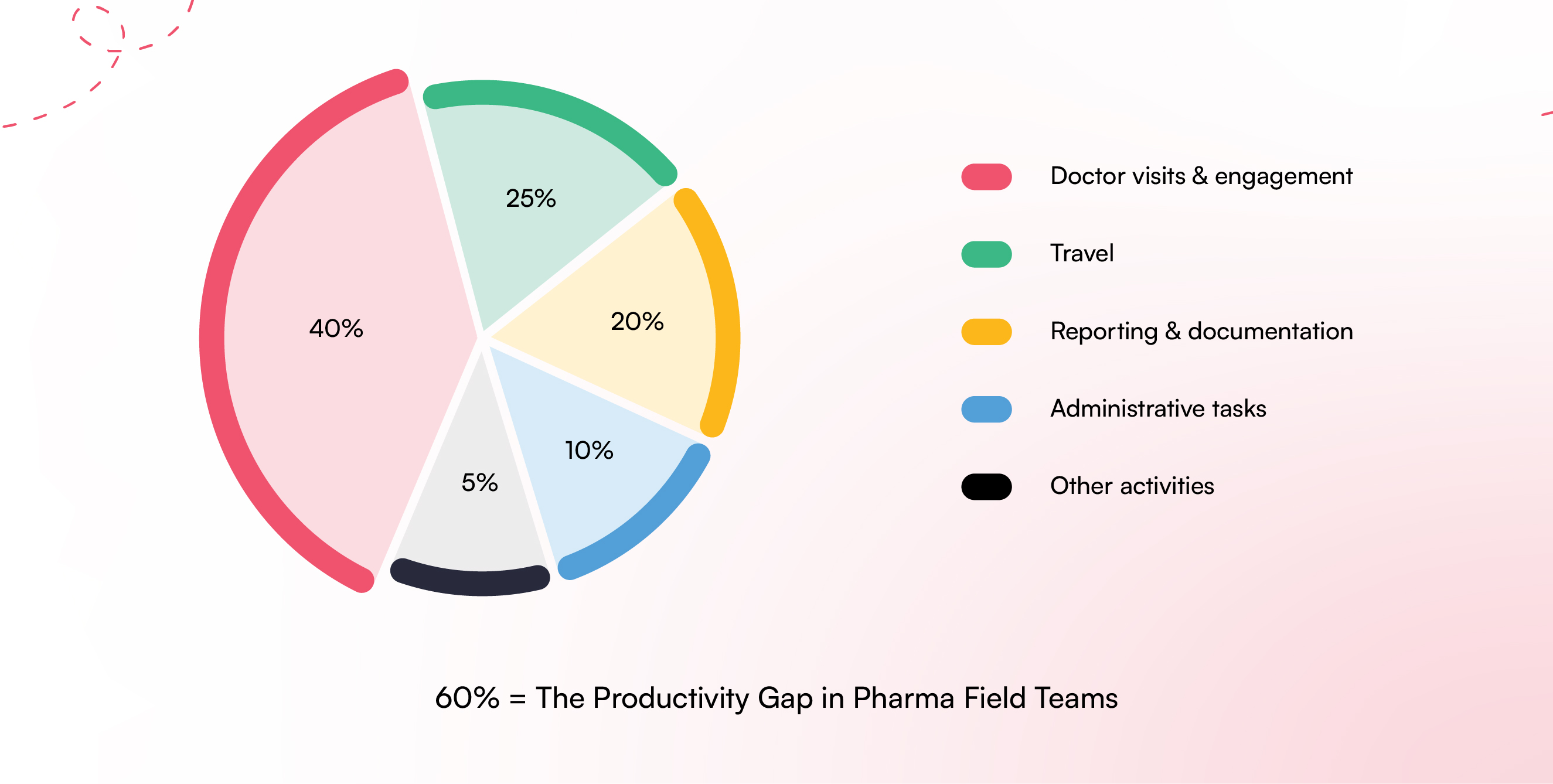
This gap shows why improving productivity requires better planning, efficient workflows, and digital support systems.
However, improving medical representative productivity remains a challenge for many pharma companies. Field teams often spend significant time on travel, reporting, and administrative work instead of engaging with healthcare professionals. Inefficient territory planning and limited field visibility can further reduce productivity.
To address these challenges, pharmaceutical companies are adopting smarter planning methods and digital tools that streamline field operations. By improving processes and using data effectively, organizations can help field teams focus more on meaningful doctor interactions.
This article explores 10 practical ways to improve medical representative productivity in pharma sales.
1. Optimize Territory Planning
Well-designed territories help medical representatives manage their schedules efficiently. Poor territory allocation can lead to excessive travel and uneven doctor coverage.
By organizing territories based on geography, doctor density, and prescription potential, companies can improve field coverage while reducing wasted travel time.
2. Plan Doctor Visits Strategically
Visiting more doctors does not always lead to better results. Productivity improves when representatives focus on the right doctors.
Structured doctor visit planning helps prioritize healthcare professionals based on specialty, prescribing potential, and previous interactions. This ensures time is spent on high-impact engagements.
3. Reduce Manual Reporting
Manual reporting often consumes valuable time for field representatives. Recording visit details, preparing reports, and submitting paperwork can take hours each week.
SANeforce’s MR reporting software allows representatives to log activities instantly after each visit. This reduces paperwork and improves reporting accuracy.
4. Prioritize High-Value Doctors Using Data
Not every doctor contributes equally to prescription growth. Data insights can help pharma companies identify doctors with the highest potential.
Using factors such as specialty, prescription patterns, and engagement history allows representatives to focus on the most important accounts.
5. Improve Manager Visibility
Sales managers need clear visibility into field activities to guide their teams effectively.
Activity dashboards and reporting systems help managers monitor doctor visits, territory coverage, and field performance. This visibility supports better coaching and more informed decisions.
6. Digitize Expense and Activity Management
Expense submissions and activity tracking can be time-consuming when handled manually.
Digital workflows simplify expense reporting, approvals, and activity tracking. This reduces administrative workload and allows representatives to focus more on doctor engagement.
7. Track Doctor Engagement
Maintaining records of doctor interactions helps representatives prepare for future visits.
A structured doctor management system allows representatives to track visit history, feedback, and follow-ups, improving continuity in doctor relationships.
8. Provide Mobile Access to Sales Information
Field representatives need quick access to doctor profiles, product information, and sales targets.
Mobile access to this data helps them prepare better for doctor visits and respond confidently during discussions.
Teams can also create video explainers for product training, enabling medical representatives to review key information before meeting healthcare professionals.
9. Use Analytics to Improve Strategy
Analytics helps pharma companies understand field performance and identify improvement opportunities.
By analyzing visit data, prescription trends, and territory performance, organizations can refine strategies and allocate resources more effectively.
10. Use Field Force Automation Tools
Technology plays an important role in improving field productivity.
Field force automation software integrates reporting, doctor management, call planning, and analytics into a single platform. Solutions like SANeForce Field Force Automation help companies streamline operations and gain better visibility into field activities.
This allows medical representatives to focus more on doctor engagement and less on administrative work.
Medical Representative Productivity Formula
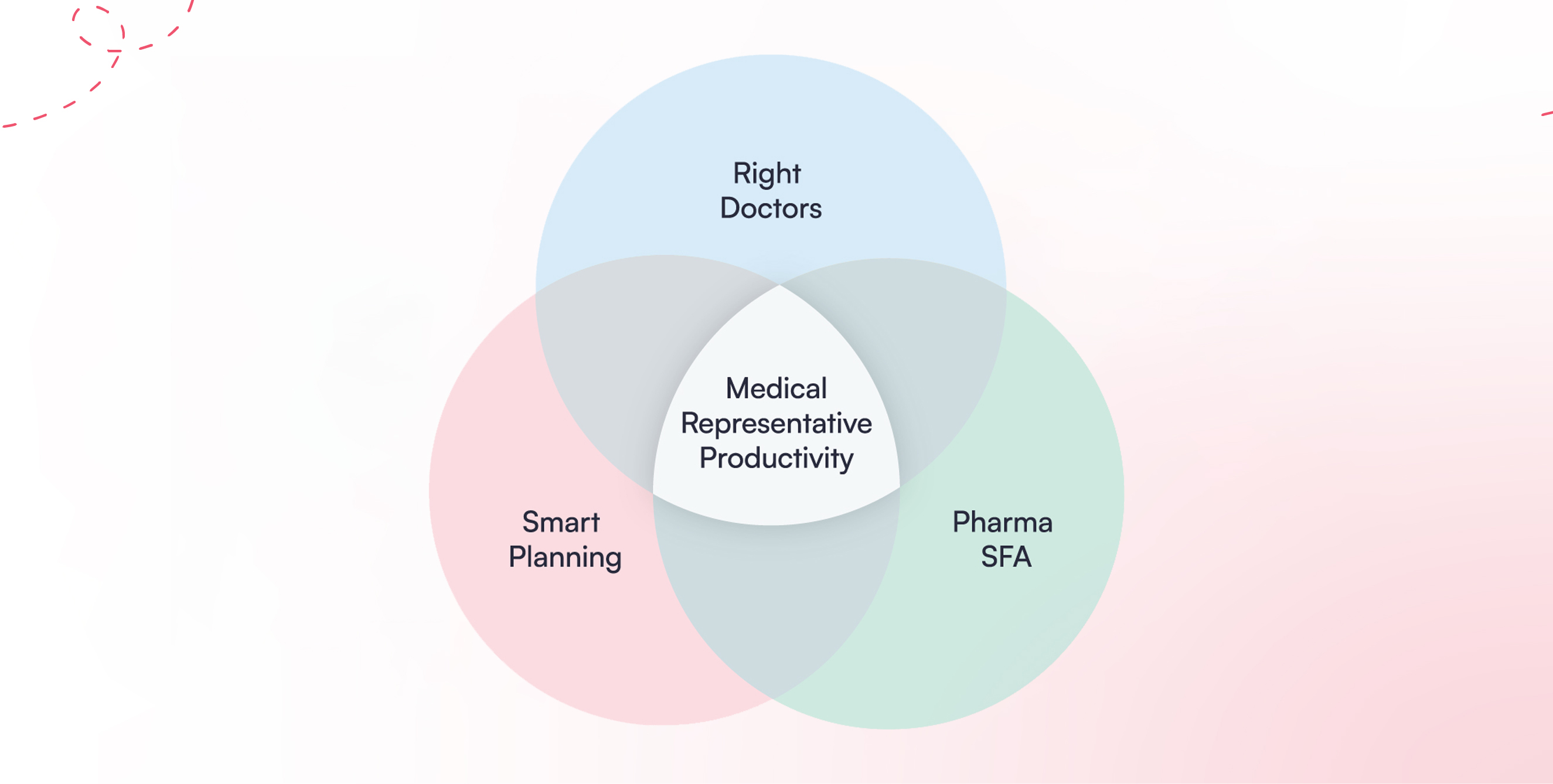
Improving productivity requires the right balance of planning and technology. When these elements work together, field teams can operate more efficiently.
Daily Productivity Checklist for Medical Representatives
Before starting the day, medical representatives can review this quick checklist.
✔ Review today’s doctor visit plan.
✔ Identify priority doctors and follow-ups.
✔ Check doctor interaction history.
✔ Prepare product information and key messages.
✔ Plan the most efficient travel route.
✔ Record visit details after each interaction.
✔ Capture doctor feedback and notes.
✔ Track daily targets and visit goals.
✔ Update activity reports.
A simple routine like this helps representatives stay organized and maintain consistent productivity in the field.
Conclusion
Improving medical representative productivity requires better planning, clear visibility into field activities, and the right digital tools.
Pharma companies that streamline reporting, optimize territories, and use data effectively can help their field teams spend more time engaging with doctors and less time managing administrative tasks.
As the pharmaceutical industry becomes more data-driven, organizations that focus on improving field force efficiency will gain a strong competitive advantage.
Frequently Asked Questions (FAQ)
1. What is medical representative productivity?
Medical representative productivity refers to how efficiently pharmaceutical sales representatives manage their time, plan doctor visits, engage healthcare professionals, and achieve their sales targets. Higher productivity means more meaningful doctor interactions while spending less time on administrative tasks.
2. Why is improving medical representative productivity important for pharma companies?
Improving medical representative productivity helps pharma companies increase doctor engagement, expand territory coverage, and improve prescription outcomes. When representatives spend more time interacting with healthcare professionals and less time on manual work, overall field performance improves.
3. What are the common challenges affecting medical representative productivity?
Common challenges include inefficient territory planning, excessive travel time, manual reporting processes, limited visibility into field activities, and difficulty identifying high-potential doctors.
4. How can pharma companies improve field force productivity?
Pharma companies can improve field force productivity by optimizing territory planning, prioritizing high-value doctors, enabling structured call planning, using analytics to guide decisions, and adopting digital tools such as field force automation platforms.
5. How does field force automation help improve medical representative productivity?
Field force automation platforms simplify tasks like activity reporting, doctor visit tracking, call planning, and performance monitoring. By reducing administrative work and providing real-time insights, these tools allow representatives to focus more on doctor engagement and sales activities.
6. What tools help improve medical representative productivity?
Tools such as pharma CRM systems, mobile reporting applications, doctor management platforms, analytics dashboards, and field force automation software help medical representatives manage their activities efficiently and improve overall productivity.