
 Get the latest Pharma insights, Straight to you on WhatsApp
 Join Channel
 Author : Francy Wishny G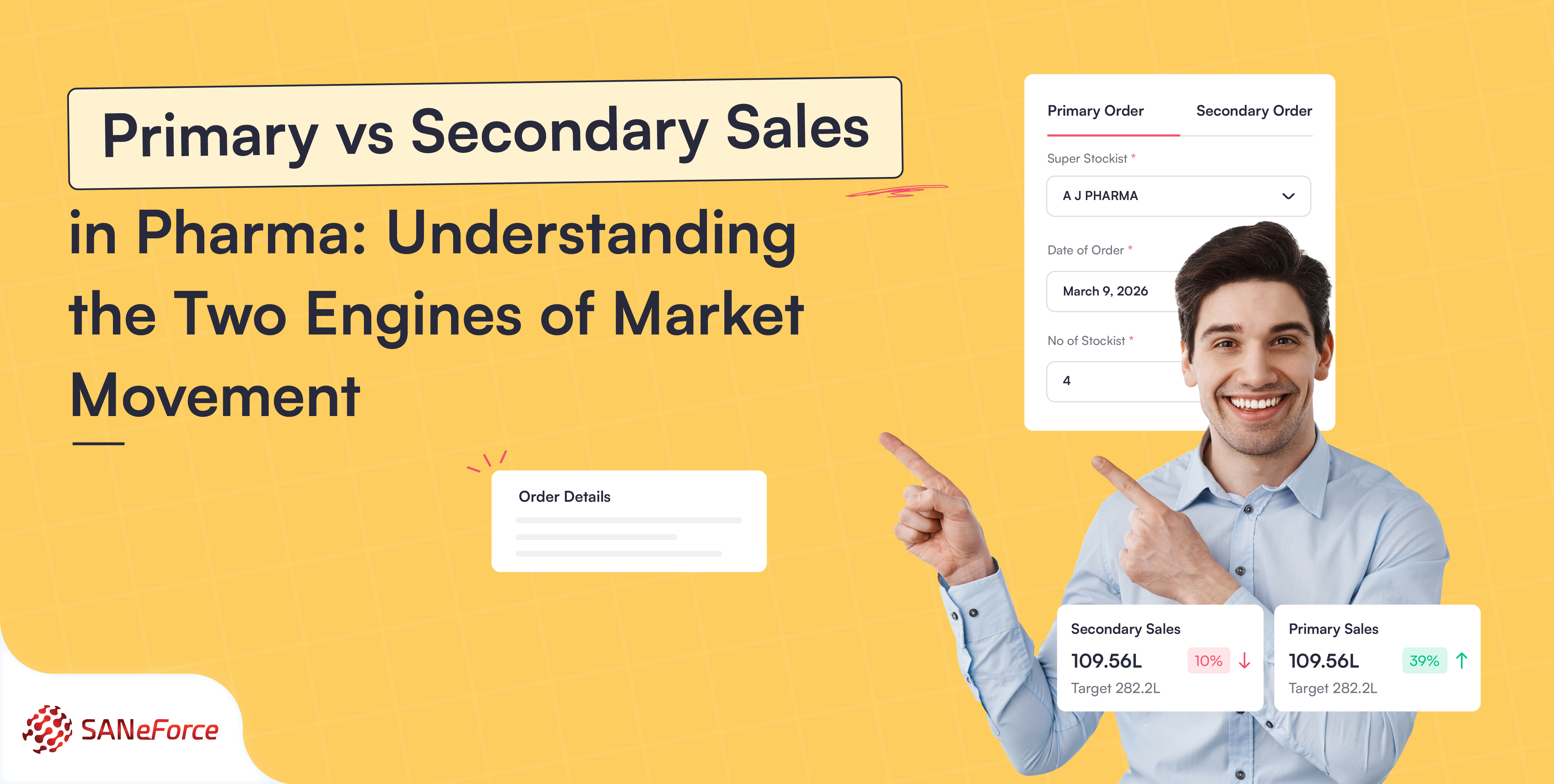
In pharma, sales are rarely a single transaction. A medicine reaching a patient usually passes through multiple stages of movement before it is finally dispensed. Because of this layered journey, the industry tracks sales through two key metrics: primary sales and secondary sales.
At first glance, both may seem like simple measurements of product movement. But in reality, they reveal two very different dimensions of how the market functions, one showing how products enter the market pipeline, and the other showing how they actually move within it.
Understanding the difference between these two is essential for anyone trying to interpret market demand, product traction, and sales performance in pharma.
Primary Sales: When Products Enter the Market Channel
Primary sales represent the first level of product movement from a pharmaceutical company into the market channel, typically toward distributors or stockists.
At this stage, the focus is on supply distribution, how much product has been dispatched into different territories or distribution networks.
For companies, primary sales provide visibility into several operational aspects:
✔ How much inventory has entered the market.
✔ How territories are performing against targets.
✔ How production aligns with supply requirements.
✔ How revenue is being recognized at the company level.
Because of this, primary sales often serve as the initial indicator of commercial performance. They reflect how effectively a company is pushing products into the market ecosystem.
But there is an important limitation.
Primary sales show what has been supplied, not necessarily what is being consumed.
In many organisations, this level of pharma sales tracking is supported through internal systems such as Pharma CRM software or integrated reporting tools that allow managers to monitor supply movement and territory performance.
Secondary Sales: Where Market Demand Becomes Visible
Secondary sales represent the next stage of product movement, when stock moves from distributors or stockists to pharmacies, hospitals, or healthcare outlets.
This is the point where real demand begins to surface.
Unlike primary sales, which capture supply distribution, secondary sales reveal market activity, the actual flow of products closer to the point of prescription and patient use.
Secondary sales help uncover patterns such as:
✔ Which products pharmacies are ordering repeatedly.
✔ Which territories show stronger prescription demand.
✔ Which brands are gaining traction in the market.
✔ How quickly stock is moving across regions.
In many cases, insights into secondary sales are gathered through field force automation platforms and MR reporting software, where medical representatives capture market activity and pharmacy interactions during their field visits.
In many ways, secondary sales provide a clearer signal of market acceptance and brand performance.
Primary vs Secondary Sales: The Strategic Difference
While both metrics track product movement, their strategic purpose differs significantly.
| Perspective | Primary Sales | Secondary Sales |
|---|---|---|
| Stage | Company → Distribution channel | Distribution channel → Healthcare outlets |
| Focus | Supply movement | Market demand |
| Insight | Stock entering the pipeline | Stock moving within the market |
| Strategic Use | Planning, forecasting, revenue reporting | Demand analysis, market performance |
Simply we could say as,
Primary sales measure how much product enters the market.
Secondary sales measure how much product the market actually absorbs.
This difference is what makes the relationship between the two so valuable.
The Gap That Often Tells the Real Story
One of the most insightful ways to understand market performance is by observing the gap between primary and secondary sales.
For instance,
When primary sales are higher than secondary sales, it often indicates that products are present in the market but not actively moving through it. This can happen if distributors hold large quantities or if pharmacies are slow to place orders due to limited prescriptions or competition.
Conversely, if secondary sales outpace primary supply, it signals rising demand or faster consumption and may indicate potential stock shortages in certain territories.
Monitoring this relationship between primary and secondary sales provides early insights into market dynamics, highlighting where demand is strong, where stock may stagnate, and where adjustments are needed for optimal market performance.
Why Both Metrics Matter for Market Strategy
Tracking primary and secondary sales together enables organizations to move beyond basic reporting and toward deeper market insights.
This is where a primary and secondary sales module becomes critical, as it connects supply data with real market movement in a single view.
Together, they help reveal:
✔ How effectively products are distributed across regions.
✔ Whether market demand aligns with supply planning.
✔ Where sales momentum is building or slowing down.
✔ Which products are gaining real traction.
This combined perspective allows companies to adjust strategies related to inventory allocation, territory planning, and brand promotion.
Without viewing both layers, sales data can easily become misleading or incomplete.
A Broader Perspective on Pharma Sales
Primary and secondary sales are often discussed as two separate metrics. But they are better understood as two perspectives of the same market movement.
Primary sales track the beginning of the journey, when products enter the distribution network.
Secondary sales track the continuation of that journey, when those products start moving toward pharmacies and ultimately patients.
Seen together, they provide a far more accurate understanding of how the pharmaceutical market behaves.
Final Thought
Behind every prescription lies a chain of product movement that begins long before the medicine reaches the patient.
Primary sales reveal how products enter the market ecosystem.
Secondary sales show how those products travel through it.
When both are understood together, they offer a clearer view of how supply, demand, and market behavior interact within the pharmaceutical landscape.
Frequently Asked Questions (FAQ)
1. How do primary and secondary sales impact pharma demand forecasting?
Primary and secondary sales data together help pharma companies forecast demand more accurately by comparing supply movement with actual market consumption.
2. What role do medical representatives play in tracking secondary sales?
Medical representatives provide field-level insights by monitoring pharmacy orders, prescription trends, and product movement in their territories using MR reporting software and field force automation tools.
3. Why is tracking secondary sales important for pharmaceutical brands?
Tracking secondary sales helps companies understand real product demand, identify fast-moving brands, and adjust market strategies accordingly.
4. How can pharma companies identify slow-moving products in the market?
By comparing primary and secondary sales trends, companies can detect products that are stocked in the channel but not actively selling.
5. What challenges do pharma companies face in monitoring secondary sales?
Limited real-time market visibility, fragmented data sources, and delayed reporting often make secondary sales tracking difficult.
6. How does sales visibility improve pharmaceutical market strategy?
Better visibility into product movement through pharma sales tracking systems and Pharma CRM software enables companies to optimize supply planning, territory focus, and brand promotion efforts.