
 Get the latest Pharma insights, Straight to you on WhatsApp
 Join Channel
 Author : Francy Wishny G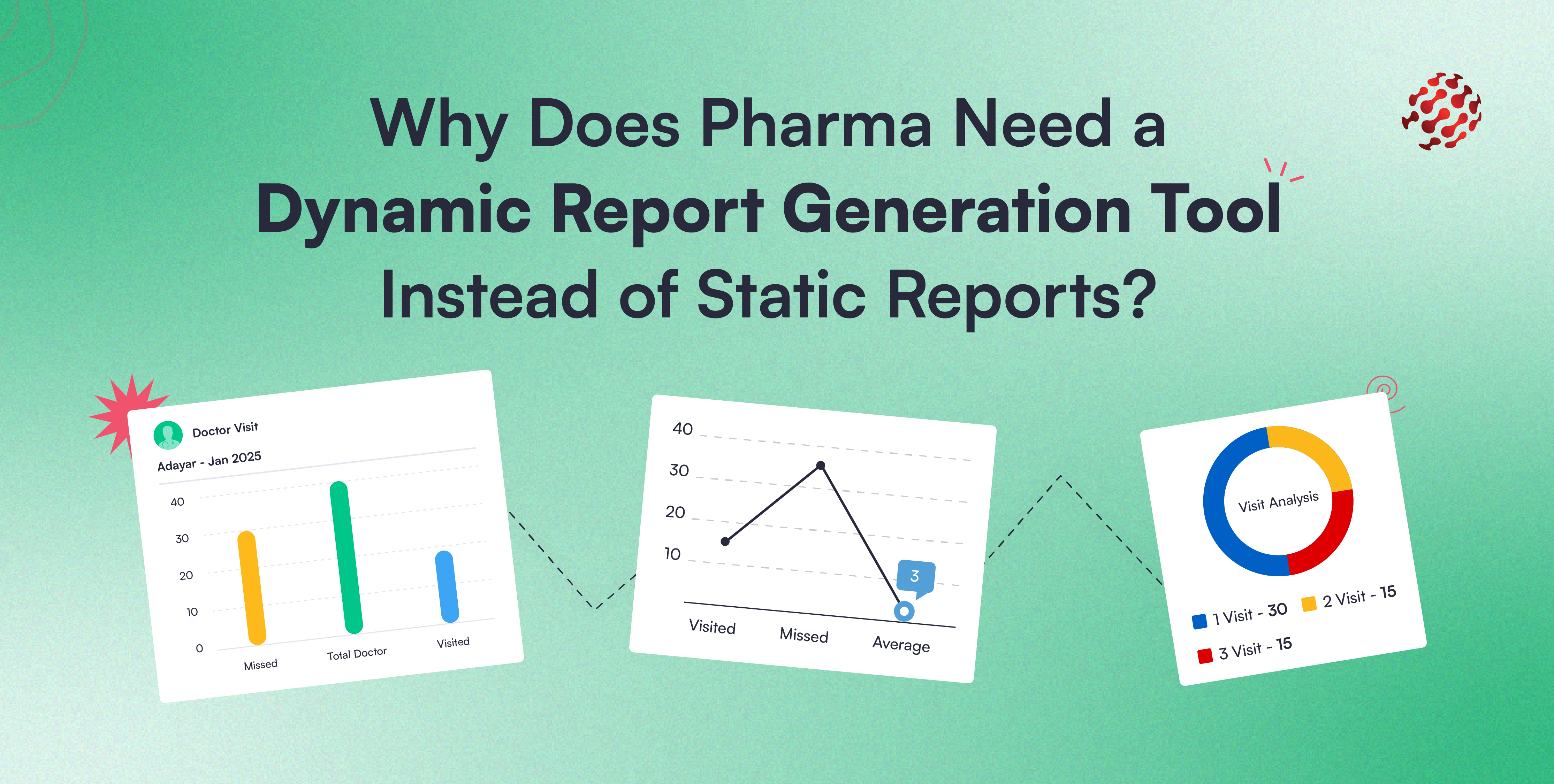
Does Your Report Show the Full Picture?
Does your report give you only numbers, or does it show a clear picture of field activity to guide your decisions?
In modern pharma sales force automation, reports should do more than summarize numbers they should reveal real field performance and guide decisions. Yet many organizations still depend on manual reporting processes. Some even hire specialists with Power BI or Excel expertise just to generate reports, leading to delays, higher costs, and dependency on specific manpower.
A dynamic report generation tool changes this by letting users create reports themselves, quickly and easily, without needing specialized skills. They can choose the format (pie charts, bar charts, etc.) to select the fields to include, apply filters for specific dates, regions, or doctors, and generate the report in multiple formats instantly. This saves time, reduces dependency on extra manpower, and provides actionable insights in real time.
How Dynamic Reporting Transforms Field Operations
When dynamic reporting is built directly into a pharma CRM, managers and field teams can build reports on their own, using real-time data already captured in the system - making reporting faster and simpler than traditional methods.
Teams can use dynamic reporting to track key metrics in real time:
⭐ Managers
MR coverage, call effectiveness, territory alignment.
⭐ Field teams
Doctor visits, prescription outcomes, priority areas.
⭐ Operations
Sales trends, sample utilization, expense patterns.
By giving field teams, the ability to create their own reports in minutes, dynamic reporting not only saves manpower and time but also ensures decisions are based on current, actionable information rather than outdated summaries.
Making Marketing Smarter with Real-Time Insights
Pharma marketing relies on knowing how doctors respond to campaigns, not just whether a message was sent. With a dynamic report generation tool, marketing teams can track:
✔ Which specialties respond best to messages.
✔ How sample distribution influences prescriptions.
✔ Which doctor groups engage most effectively.
✔ Where to focus marketing spend for maximum impact.
These insights allow campaigns to adapt as they run, making messaging more targeted, responsive, and effective without waiting for month-end reports.
Driving Strategic Decisions with Confidence
Leadership teams can use dynamic reporting to generate tailored insights for strategic planning. Custom reports help forecast demand, plan territory coverage, allocate resources, and align inventory with real market activity.
However, even with fast and flexible reports, critical thinking remains essential. Teams must interpret trends carefully, validate anomalies, and connect insights with actual field behavior. Accurate, actionable data combined with thoughtful analysis leads to better, informed decisions.
Key Functions of a Dynamic Report Generation Tool
The strength of a dynamic reporting tool lies in letting teams create, filter, and analyze reports themselves. Its key functions include:
✨ Customizable formats
Pie charts, bar charts, tables, or visual dashboards.
✨ Field selection
Choose exactly which data points matter.
✨ Filters for precise analysis
Dates, doctors, regions, products, or targets.
✨ Multiple output options
PDFs, Excel, dashboards, or shareable reports.
✨ Role-based dashboards
Users see data relevant to their responsibilities.
✨ Integration
With SFA, CRM, ERP, and MR systems for smooth data flow.
✨ Alerts and highlights
For unusual patterns or deviations.
These functions eliminate dependency on specialized manpower, save time, and allow teams to generate actionable insights instantly.
Ensuring Reliable Data for Accurate Reporting
Even the most advanced tool depends on clean, trustworthy data. Accuracy comes from:
✔ Maintaining up-to-date master data.
✔ Enforcing validation rules during MR submissions.
✔ Regularly auditing workflows and report templates.
✔ Training teams to report field activity correctly.
✔ Removing duplicate or outdated entries.
With these practices, dynamic reporting reflects true performance, showing real market behaviour, and giving teams confidence in every report they generate.
Conclusion
A dynamic report generation tool is more than just a reporting feature it’s a foundation for faster, smarter, and more flexible pharma operations. By allowing teams to create reports in their preferred formats, select the fields and filters that matter, and generate actionable insights instantly, it empowers the entire organization:
✔ Field teams plan better and act faster.
✔ Managers monitor performance accurately.
✔ Marketing adapts campaigns based on real-time doctor responses.
✔ Leadership makes data-driven, strategic decisions.
In an industry where doctor interactions and market conditions change daily, customizable, dynamic reporting saves time, reduces manpower costs, and drives clarity, agility, and sustained performance.
FAQs (Frequently Asked Questions)
1. How is a dynamic report generation tool different from standard reporting?
It allows users to create their own reports in multiple formats, select the fields and filters they want, and generate insights immediately without needing specialized skills.
2. How does it help field managers?
Managers can quickly generate reports on coverage, call effectiveness, and territory alignment, enabling faster, more precise decisions.
3. Can marketing teams use it to improve campaigns?
Yes. Marketing teams can track doctor engagement, sample utilization, and message impact in real time and adjust campaigns immediately.
4. Why is data quality important?
Custom reports are only as good as the data behind them. Clean, validated data ensures accurate insights.
5. Does it integrate with other pharma systems?
Yes, it connects with ERP, SFA, CRM, and MR systems for seamless reporting.
6. How does it support compliance?
Through geo-verification, timestamps, audit trails, and validation checks that ensure transparent, accountable reporting across all teams.