
 Get the latest Pharma insights, Straight to you on WhatsApp
 Join Channel
 Author : Komalalakshmi M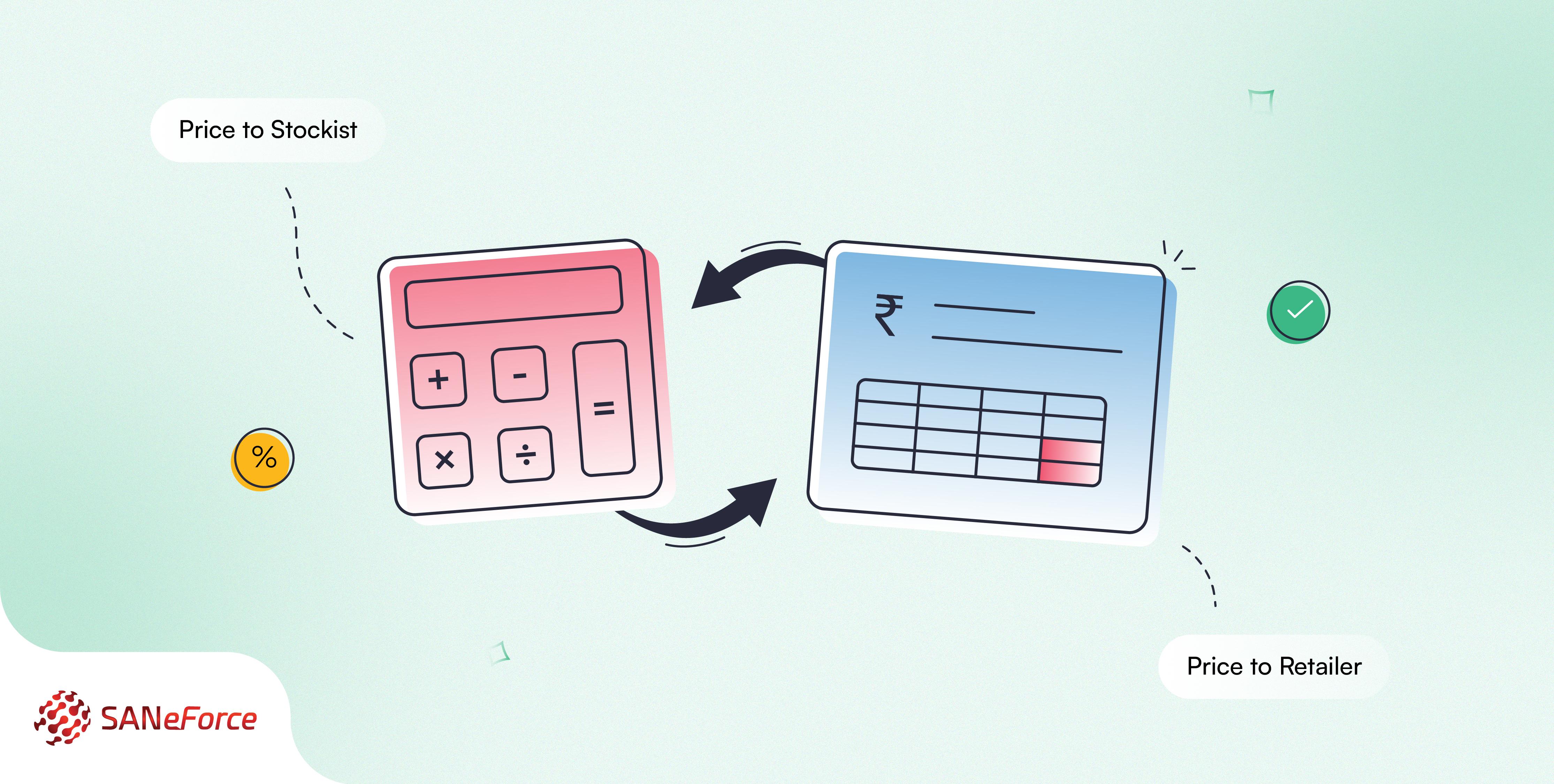
What Are PTS and PTR in Pharma Marketing?
A pharmaceutical product does not move directly from the manufacturer to the patient. It usually passes through several levels, including distributors, stockists, retailers and pharmacies. At each stage, a different price may apply.
Two commonly used pricing terms in the Indian pharmaceutical trade are:
✔ PTS: Price to Stockist.
✔ PTR: Price to Retailer.
PTS is generally the price at which a company or channel partner supplies a product to a stockist or distributor. PTR is the price at which the stockist supplies the product to a retailer or pharmacy.
These prices help companies calculate sales value, manage trade margins and record orders accurately.
What Is PTS?
PTS means Price to Stockist. It is the price at which a pharmaceutical company, carrying and forwarding agent or authorised distributor supplies medicines to a stockist.
For example, if a company supplies a product at a PTS of ₹80 per strip and invoices 500 strips, the basic sales value would be:
₹80 × 500 = ₹40,000
In many pharma organisations, primary sales are recorded using the PTS value. However, the final calculation may also depend on discounts, free goods, credit notes, taxes and the company’s internal commercial policy.
Why Is PTS Important?
PTS helps a pharma company:
✔ Calculate primary sales.
✔ Set stockist-level pricing.
✔ Maintain consistent trade margins.
✔ Prepare invoices and sales reports.
✔ Compare product performance across territories.
✔ Plan dispatches and distribution targets.
A wrong PTS entry can affect billing, incentives, stockist profitability and sales reporting. That is why companies should maintain an updated price master in their sales system.
What Is PTR?
PTR means Price to Retailer. It is the price at which a stockist or distributor supplies a medicine to a retailer, chemist or pharmacy.
For instance, if the PTR of a product is ₹95 per strip and a stockist sells 300 strips to retailers, the transaction value would be:
₹95 × 300 = ₹28,500
PTR is not the same as MRP. PTR is a trade price, while MRP is the maximum retail price printed on the product pack.
Why Is PTR Important?
PTR gives the retailer visibility into the purchase price and expected trade margin. It also helps pharma companies and stockists:
✔ Track retailer-level orders.
✔ Monitor product movement.
✔ Calculate secondary sales.
✔ Manage retailer schemes.
✔ Identify fast- and slow-moving products.
✔ Maintain transparent trade relationships.
The applicable price and margin can differ depending on the product, company policy, market and regulatory requirements. Therefore, commercial teams should always refer to the approved price list.
PTS, PTR and MRP Explained
| Term | Full form | Used in |
|---|---|---|
| PTS | Price to Stockist | Company or distributor to stockist |
| PTR | Price to Retailer | Stockist to retailer |
| MRP | Maximum Retail Price | Printed price for the customer |
A simplified distribution chain looks like this:
Pharmaceutical company → Stockist → Retailer or pharmacy → Patient
In some markets, a C&F agent, distributor or super-stockist may also be part of the chain. The exact structure depends on the company’s distribution model.
Difference Between Primary and Secondary Sales
PTS and PTR are directly connected with primary sales and secondary sales.
Primary sales
Primary sales refer to the movement or billing of products from the pharmaceutical company or C&F channel to a stockist or distributor. This is the point at which products enter the trade channel.
Primary sales help companies measure:
✔ Company billing.
✔ Dispatch performance.
✔ Stockist orders.
✔ Product supply into a territory.
✔ Achievement against sales targets.
For example, when a stockist purchases 1,000 strips from a company, that transaction is generally considered primary sales.
Secondary sales
Secondary sales refer to the sale or movement of products from a stockist or distributor to retailers, pharmacies, hospitals or other downstream customers.
Secondary sales help reveal whether products are actually moving through the market. They provide useful information about:
✔ Retailer demand.
✔ Product availability.
✔ Stockist performance.
✔ Brand acceptance.
✔ Territory-level movement.
✔ Inventory pressure.
The key difference is simple:
Primary sales show what has entered the distribution channel. Secondary sales show what has moved further through the channel.
A company that looks only at primary sales may miss the fact that stock is accumulating with distributors. Comparing primary sales with secondary sales gives a more realistic view of market performance.
What Is Order Booking in Pharma?
Order booking is the process of recording and confirming product requirements from stockists, retailers, hospitals or pharmacies.
In the past, medical representatives and sales teams often collected orders through paper notes, phone calls or messaging applications. While these methods may work for small transactions, they can create problems such as:
✔ Incorrect product quantities.
✔ Duplicate orders.
✔ Missed orders.
✔ Outdated prices.
✔ Delayed approvals.
✔ Poor visibility of order status.
A digital order-booking process usually includes product selection, quantity entry, price validation, discount application, approval, dispatch and delivery tracking. Modern systems can also support online and offline order capture for field teams.
How Pharma CRM Simplifies Order Booking
A Pharma CRM brings customer management, field-force activity, order booking, pricing and sales reporting into one platform.
1. Accurate pricing
A Pharma CRM can display the approved PTS and PTR for each product or customer category. This reduces the risk of using an old price list during order booking.
2. Faster field sales
Medical representatives can select the customer, choose products and submit orders directly through a mobile application. This reduces paperwork and saves time during market visits.
3. Better order visibility
Sales managers can track booked, approved, dispatched and pending orders. They can also review performance by product, territory, representative or stockist.
4. Primary and secondary sales tracking
A CRM can help companies record primary sales and, where data is available, monitor secondary sales or sell-out activity. This makes it easier to identify whether sales growth is supported by actual product movement.
5. Inventory and expiry control
When order data is connected with inventory information, companies can identify excess stock, slow-moving products and near-expiry batches before they become larger problems.
6. Controlled discounts and schemes
Pharma orders often include trade discounts, promotional schemes or free goods. A CRM can apply approved rules and send unusual requests for managerial approval.
7. Data-based planning
Order history, sales trends, inventory levels and retailer demand can help companies plan dispatches more accurately instead of relying only on assumptions.
Simple Example of PTS, PTR and Sales
Consider this example:
✔ PTS: ₹80 per strip.
✔ PTR: ₹95 per strip.
✔ Quantity billed to stockist: 1,000 strips.
✔ Quantity sold by stockist to retailers: 700 strips.
The estimated values are:
Primary sales: ₹80 × 1,000 = ₹80,000.
Secondary sales: ₹95 × 700 = ₹66,500.
Remaining quantity: 300 strips, before considering opening stock, returns, transfers or other sales.
This example shows why primary sales should not be viewed in isolation. The company may have billed 1,000 strips, but only 700 strips have moved to retailers during the period considered.
Common Mistakes Companies Should Avoid
1. Treating PTS and PTR as the same
PTS applies to the stockist-level transaction, while PTR applies to the retailer-level transaction. Mixing them can lead to incorrect margins and sales reports.
2. Focusing only on billing
High primary billing does not always represent strong market demand. Companies should also check secondary sales, closing stock, returns and inventory ageing.
3. Ignoring schemes and free goods
Discounts, promotional schemes, free units and credit notes can change the actual value of a transaction. These should be recorded separately and consistently.
4. Using outdated tax information
Pricing explanations found online may use older tax terminology or formulas. The correct treatment depends on current regulations, product classification and company policy.
5. Booking orders without validation
Manual order booking can result in incorrect pack sizes, prices or quantities. A Pharma CRM can add validation rules before an order is submitted.
Final Thoughts
PTS and PTR are not just pricing abbreviations used by pharma sales teams. They influence order booking, trade margins, sales calculations and the movement of products across the distribution network.
When companies connect PTS and PTR management with primary sales, secondary sales and a Pharma CRM, they gain better control over their sales process. The result is faster order booking, fewer pricing errors, improved market visibility and more informed business decisions.
Frequently Asked Questions?
1. What does PTS mean in pharma?
PTS means Price to Stockist. It is the price at which a pharmaceutical product is supplied to a stockist or distributor.
2. What does PTR mean in pharma?
PTR means Price to Retailer. It is the price at which a stockist or distributor supplies a product to a retailer or pharmacy.
3. Is PTR the same as MRP?
No. PTR is the trade price paid by the retailer, while MRP is the maximum retail price printed on the product pack.
4. How does a Pharma CRM help with order booking?
A Pharma CRM helps field teams record orders digitally, apply approved prices, manage discounts, check order status and share real-time sales information with managers.
5. Why should companies track secondary sales?
Secondary sales provide a clearer view of product movement beyond company billing. They can help identify demand, excess inventory, weak territories and stockist-level issues.