
 Get the latest Pharma insights, Straight to you on WhatsApp
 Join Channel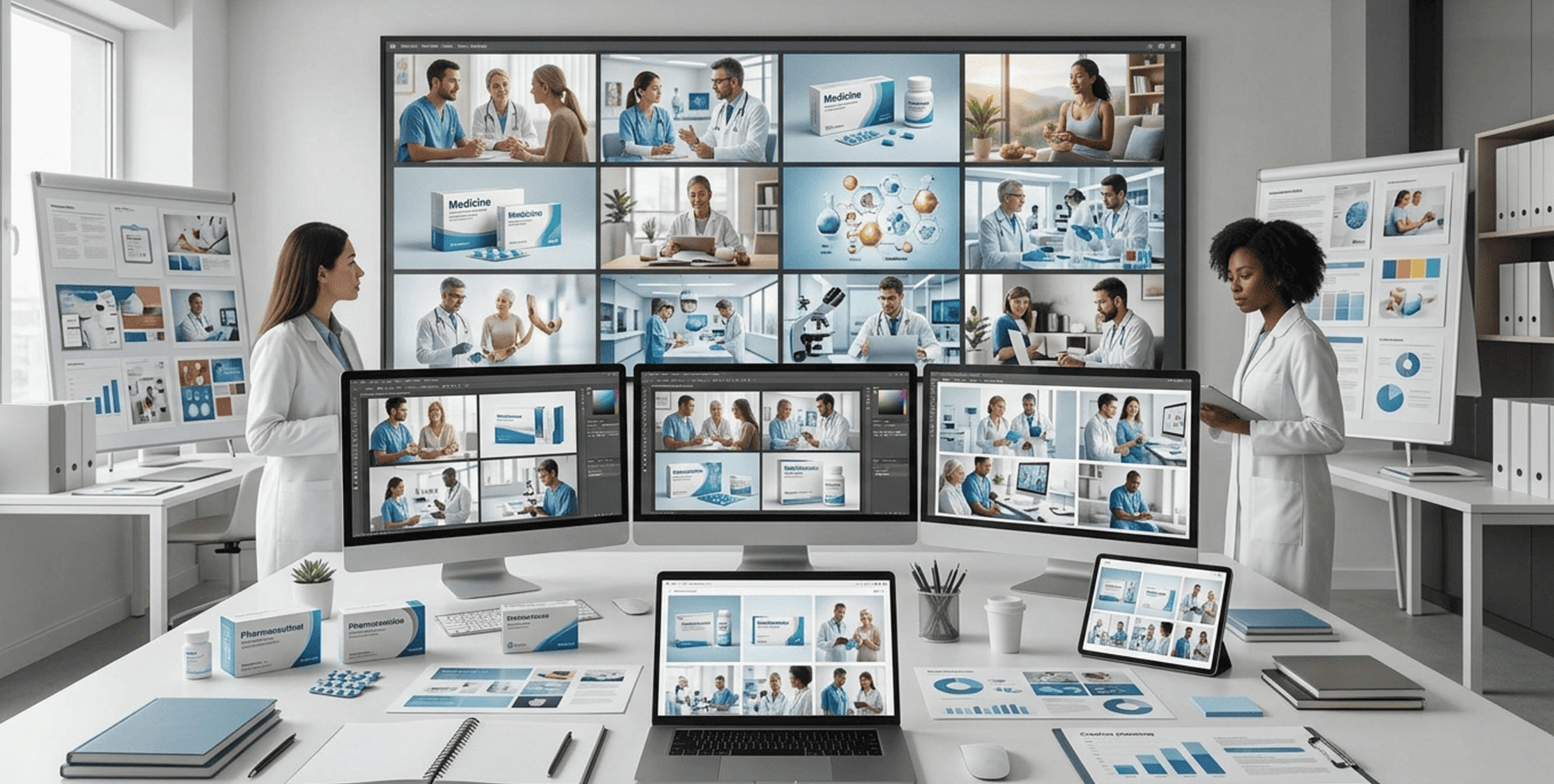
How an AI Image Generator Can Help Pharmaceutical Marketing Teams Create Better Visual Content
Pharmaceutical marketing has changed quite a bit. A product message that once lived mainly in printed visual aids or sales materials may now appear in presentations, digital campaigns, educational content, websites and social channels. At the same time, pharma teams have to communicate information clearly while working within strict review and compliance processes.
That makes the creative stage more important than ever. Before a campaign is approved or a presentation is prepared, teams need to understand what an idea could look like.
An AI Image Generator can be useful at this early stage, with Higgsfield helping marketers turn concepts into visual directions and test creative ideas. It can help marketers turn a written concept into a visual starting point, compare different creative directions and communicate an idea to colleagues before investing time in final production
This does not mean generated imagery should replace medical review, approved product information or professional design. Instead, it can sit earlier in the workflow, where teams are exploring possibilities and deciding which ideas are worth developing.
Why Visual Planning Matters in Pharma Marketing
A pharmaceutical campaign may involve several people. Marketing teams develop the concept, product teams review the message, designers work on the presentation and other stakeholders may check whether the material is suitable for its intended audience.
Sometimes the hardest part is simply getting everyone to picture the same thing.
A written description can be interpreted in several ways. One person may imagine a clean clinical design, while another may picture something more educational and approachable. An AI Image Generator can provide a rough visual reference that gives everyone something concrete to discuss.
This can be particularly useful for teams working on digital detailing and other forms of healthcare professional engagement. SANeForce's e-detailing solution, for example, is designed around digital pharmaceutical content, doctor centric presentation, interaction tracking and access to updated marketing collateral.
The generated image does not become the approved material. It simply helps the creative conversation move forward.
Turning Campaign Ideas Into Visual Directions
Imagine a pharmaceutical marketing team is preparing a campaign around disease awareness. The team knows the key message, audience and general tone, but the visual direction has not been decided.
Instead of immediately asking a designer to produce a finished concept, an AI Image Generator can be used to explore several possibilities.
One version might use a clean clinical setting. Another might focus on everyday patient experiences. A third might use simple illustrations and minimal visual elements.
Seeing those options can reveal something that is difficult to discover through a meeting alone. Perhaps one direction feels too clinical. Another may look too promotional. A third may communicate the intended message more clearly.
This makes visual generation less about producing a final picture and more about asking better creative questions.
Higgsfield can fit into this exploratory stage when a team wants to experiment with different visual treatments before choosing a direction. Higgsfield can be useful for comparing creative approaches without treating the first concept as the final answer.
Supporting Better E-Detailing Concepts
Digital detailing has become an important part of modern pharma engagement. SANeForce describes its e-detailing platform as a way to provide updated marketing collateral, support interactive presentations and capture engagement information from detailing sessions.
That makes visual consistency especially important.
An AI Image Generator can help marketing teams think about how a product story might be presented across a sequence of slides. For example, a team could explore an opening visual, a disease awareness illustration, a mechanism of action concept and a closing visual direction.
The actual medical content would still need to come from approved sources. The visuals should also be reviewed appropriately before they are used with healthcare professionals.
The advantage is that marketers can explore the overall look and feel before the final deck is built.
This can also help teams explain an idea to an external agency or internal design department. A rough visual reference can communicate a creative direction much faster than several paragraphs of description.
Explore Ideas Without Starting From a Blank Page
Creative work can sometimes slow down because everyone is waiting for the first concept.
An AI Image Generator gives marketing teams another way to get past that blank page problem. A marketer can describe the audience, setting, mood and broad visual idea and use the resulting image as a starting point for discussion.
The first result may not be useful at all. That is okay.
Perhaps the background is wrong. Maybe the composition feels too busy. The people may not look appropriate for the intended audience. Or the visual may simply feel too generic.
Each of those reactions provides information.
Instead of asking, “What should we create?”, the team can ask, “What do we like about this, and what should change?”
That is a much more productive creative conversation.
Higgsfield can also be part of this process when marketers want to explore different creative directions before handing a selected concept to the design team.
Create More Consistent Campaign Concepts
Large pharmaceutical campaigns often need to work across several pieces of communication.
A campaign might have a presentation, digital advertisements, educational graphics, social content and other supporting materials. Each piece can look different, but they still need to feel as though they belong to the same campaign.
An AI Image Generator can help teams explore a visual language before individual assets are produced.
For instance, marketers could experiment with a particular colour direction, composition style, lighting approach or illustration style. Once a direction has been selected, the design team can use it as a reference when creating the final approved materials.
This can reduce the risk of everyone working from a slightly different interpretation of the original idea.
The important word here is concept. Generated imagery should help establish a direction, not become a shortcut around the normal design and approval process.
Helping Marketing Teams Explain Complex Ideas
Pharmaceutical communication can involve complicated subjects. Even when the scientific information is accurate, it may not always be easy to explain visually.
An AI Image Generator can help teams brainstorm ways of representing an abstract concept.
Suppose a marketer needs to communicate a general idea about patient pathways, treatment stages or healthcare interactions. The team could use generated visuals to explore whether the idea works better as a scene, diagram inspired illustration, conceptual image or sequence of simple visual moments.
This can be especially useful during internal presentations.
A marketing manager does not necessarily need a finished graphic for an early meeting. They may simply need something that helps colleagues understand the direction being proposed.
That distinction can save time. A rough concept can be created quickly, discussed and discarded without putting the same amount of effort into every possible direction.
Keep Scientific Accuracy Separate From Creative Exploration
There is an important line pharmaceutical marketers should maintain.
An AI Image Generator can create an attractive visual, but attractiveness does not make an image medically accurate.
Generated imagery should not be treated as evidence. It should not invent clinical outcomes, alter scientific information or create an impression that a product has benefits that have not been properly established.
For healthcare communication, the factual message must come from appropriate and approved sources. Visuals should support that message rather than change it.
This is one reason the best use of generated imagery is often during the brainstorming stage.
Once the creative direction is selected, the final asset can be produced and reviewed through the organisation's normal process.
Higgsfield should be treated in the same way. It can support creative exploration, but it should not be used as a substitute for medical, legal, regulatory or brand review.
Where AI Fits Into an Existing Marketing Workflow
Pharma companies already use technology to manage many parts of field operations. SANeForce, for example, brings together MR reporting, e-detailing, event management and field automation, while its platform includes features such as campaign management and digital doctor engagement.
Visual generation can complement that broader digital environment rather than replace it.
A simple workflow could look like this:
1. Define the communication goal
Decide what the campaign needs to communicate and who will see it.
2. Gather approved information
Make sure the scientific and product information comes from appropriate sources.
3. Explore visual directions
Use an AI Image Generator to create rough concepts.
4. Review the concepts
Ask whether the visuals fit the audience, message and brand.
5. Develop the selected direction
A designer can turn the chosen idea into a polished asset.
6. Complete the normal review process
The final material should go through the appropriate medical, legal, regulatory and brand checks.
7. Use the approved asset
Only the reviewed and approved version should be used in the intended communication channel.
This approach keeps AI in a supporting role.
Making Internal Collaboration Easier
Marketing teams do not always struggle because they lack ideas. Sometimes they struggle because explaining an idea takes too long.
An AI Image Generator can make those conversations more visual.
A product manager could show a rough concept to a marketing team. A designer could suggest changes. A sales leader could explain whether the idea would work in a field presentation. The group can then decide whether to develop it further.
This is particularly useful when people are working across departments or locations.
A simple visual reference can reduce misunderstandings and give everyone a shared starting point.
Higgsfield can also support this kind of early collaboration by giving teams another way to test visual concepts before deciding which direction deserves more time.
Don't Let AI Make the Campaign Look Generic
There is another issue worth considering. AI generated visuals can make it very easy to produce something that looks polished but does not have much personality. If every campaign uses the same generic imagery, the content may become forgettable.
An AI Image Generator should therefore be used to explore ideas rather than automatically decide what the campaign should look like.
The marketing team still needs to ask what makes the brand different. What does the audience need to understand? What visual approach feels appropriate for the therapeutic area? Does the image support the message or simply make the slide look attractive? Good creative work still depends on judgement.
Technology can provide more options, but someone has to decide which options are worth keeping.
A Practical Approach for Pharma Marketing Teams
The easiest way to introduce an AI Image Generator into a marketing workflow is to start with a small project.
Choose one upcoming presentation, campaign concept or internal proposal. Create several visual directions and compare them with the original brief.
Look for three things.
✔ First, does the visual communicate the intended idea?
✔ Second, does it fit the brand and audience?
✔ Third, would a designer be able to turn the concept into an appropriate final asset?
If the answer is yes, the experiment has done its job.
If the result does not work, that is useful too. The team has learned what it does not want before spending significant time developing the concept.
Higgsfield can be included in this kind of controlled experimentation, particularly when the team wants to compare different creative treatments. The key is to keep the process focused rather than generating endless variations.
What Teams Should Check Before Using Generated Visuals
Before an AI Image Generator becomes part of regular pharmaceutical marketing work, teams should establish some simple internal rules.
Consider what information can be entered into an external platform. Confidential campaign details, unreleased product information, personal information and sensitive business material may require additional safeguards.
Teams should also understand the terms governing generated content and confirm that the intended use is appropriate.
Most importantly, generated visuals should be clearly separated from approved scientific content.
A useful internal rule is simple: AI can help explore the picture, but the organisation remains responsible for the message.
That mindset makes it easier to use new creative technology without losing the controls that pharmaceutical communication requires.
The Creative Side Still Needs Human Judgment
Higgsfield AI creative suits can give marketers another way to experiment with visual ideas, but the strongest campaign is rarely the one with the most elaborate imagery.
Sometimes a simple concept communicates a message better than a complicated one.
A good marketer understands the audience, the product, the communication objective and the context in which the material will be viewed. Those decisions cannot be handed over completely to a generation tool.
The technology can speed up the exploration stage. Human experience should shape what happens next.
That balance is particularly important in pharmaceutical marketing, where clarity and trust matter as much as visual appeal.
Final Thoughts
An AI Image Generator can be a useful creative aid for pharmaceutical marketing teams that want to explore visual concepts before investing in final production.
It can help teams move from a written campaign idea to a visual reference, compare creative directions, prepare e-detailing concepts and make internal discussions easier. It can also give designers and marketers a clearer starting point when a campaign is still taking shape.
The value is not in generating a perfect image instantly. The real benefit is having another way to think through an idea.
Higgsfield can be one option for that early creative process, especially when teams want to explore several visual treatments. Used carefully, Higgsfield can help marketers test possibilities while keeping the final decisions with the people responsible for the campaign.
For pharmaceutical companies, the best approach is a balanced one. Use an AI Image Generator to explore and communicate creative ideas, then rely on experienced marketers, designers and appropriate review teams to turn those ideas into accurate, compliant and useful communication.
Technology can make the first step easier. The quality of the final campaign still depends on the thinking behind it.